
Introducción a las mejores palas de pádel para principiantes 2026
El auge del pádel y la confusión del principiante
El pádel está experimentando un crecimiento explosivo en todo Estados Unidos. Sin embargo, este rápido ascenso conlleva un obstáculo común: la confusión con el equipo. Pisar la cancha por primera vez significa enfrentarse a una abrumadora cantidad de formas de palas, espumas de núcleo y materiales de superficie. Encontrar las mejores palas de pádel para principiantes en 2026 no debería requerir un título avanzado en ciencia de materiales.
Por qué importa tu primera pala
Tu elección inicial de equipo tiene consecuencias directas y reales tanto en tu juego como en tu salud física.
- Prevención de lesiones: Jugar con una pala demasiado pesada o rígida con frecuencia provoca fatiga severa en el brazo y “codo de tenista” (epicondilitis).
- Progresión de habilidades: Una pala enfocada en principiantes proporciona un punto dulce masivo, perdonando tus golpes descentrados mientras construyes una técnica fundamental.
- Desperdicio financiero: Comprar una pala agresiva y de nivel profesional demasiado pronto generalmente resulta en una inmensa frustración y una pieza de fibra de carbono muy costosa acumulando polvo en tu armario.
Lo que dicen más de 37.000 jugadores de Reddit
Para desglosar el ruido del marketing de las marcas, analizamos los conocimientos de más de 37.000 jugadores de pádel activos en las principales comunidades de Reddit. El consenso de la comunidad es sin filtros y muy práctico.
“No compres una pala profesional con forma de diamante solo porque se vea genial. Te pasarás cada partido golpeando el cristal y lastimándote la muñeca. Compra una pala redonda de fibra de vidrio.” — usuario de r/padel
Los jugadores reales están abrumadoramente de acuerdo: prioriza el control sobre la potencia desde el primer día. Los comentarios auténticos y difíciles de obtener de la comunidad siguen siendo la guía definitiva para seleccionar tu primera pala de pádel.
5 Principios clave para encontrar las mejores palas de pádel para principiantes 2026
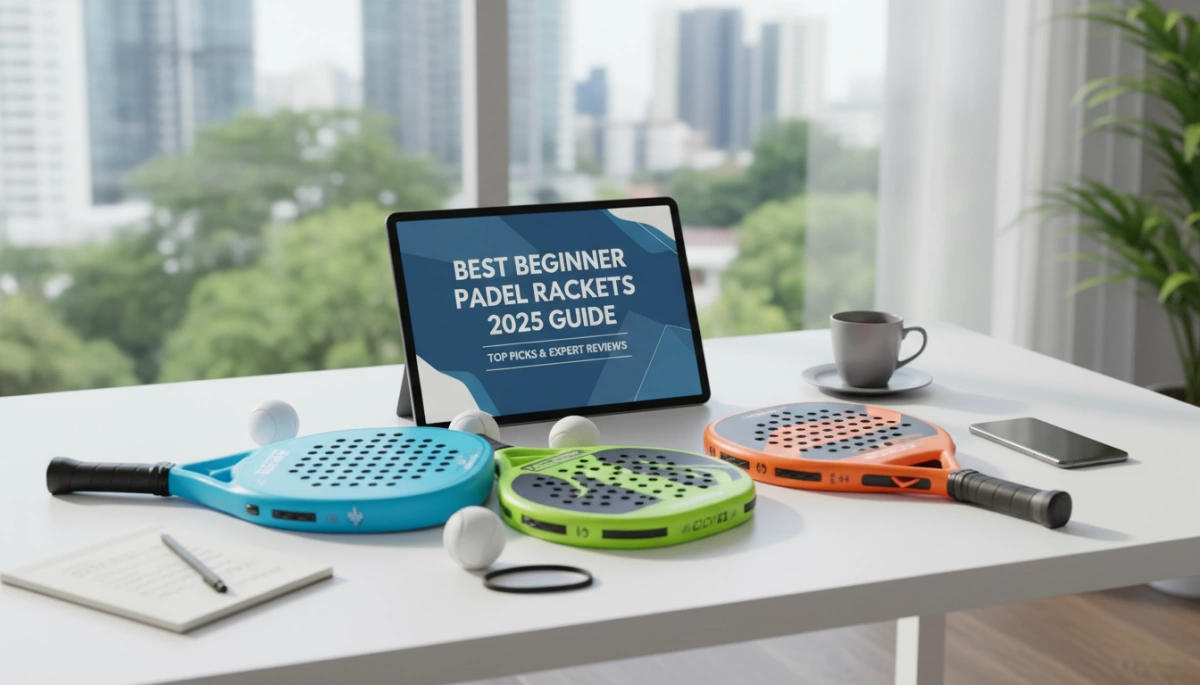
Antes de entrar en modelos específicos, siempre les digo a los nuevos jugadores que se centren en lo básico. Si entiendes lo que hace que una pala sea fácil de jugar, puedes ignorar el ruido del marketing y encontrar el equipo adecuado. Basándome en lo que estamos viendo en el mercado estadounidense y en los comentarios de miles de jugadores, aquí están las cinco reglas de oro para elegir tu primera pala.
Rango de peso ideal (360–370g) y por qué importa
El peso es el factor más importante para la comodidad. Una pala pesada puede sonar genial para rematar, pero agotará tu brazo y ralentizará tu tiempo de reacción en la red.
- El punto dulce: Quédate estrictamente en el rango de 360g a 370g.
- El beneficio: Este peso es lo suficientemente ligero como para maniobrar rápidamente, pero lo suficientemente estable como para bloquear pelotas rápidas. Mantenerse en este rango también es la mejor manera de prevenir lesiones comunes en principiantes, como el codo de tenista, mientras tus músculos se adaptan al deporte.
La mejor forma para principiantes: la pala redonda
Las palas de pádel vienen en varias formas, pero si estás empezando, una pala redonda es obligatoria.
Los modelos redondos colocan el equilibrio del peso más cerca del mango, lo que te brinda el máximo control. Más importante aún, las palas redondas tienen un punto dulce masivo justo en el centro de la cara. Esto significa menos golpes fallidos, mayor precisión y una facilidad mucho mayor para mantener la pelota en juego cuando aún estás descubriendo tu mecánica de golpeo.
Rango de precios recomendado: 100–200 $
No malgastes tu presupuesto en una pala profesional de primera línea nada más empezar. La mejor relación calidad-precio se encuentra entre los 100 y 200 $.
En este rango de precios, obtienes materiales duraderos y de alta calidad que te durarán fácilmente tu primer año o dos de juego. Ir más barato suele significar jugar con plástico pesado y torpe que se rompe fácilmente. Ir más caro significa pagar por características rígidas y avanzadas que en realidad hacen que el juego sea más difícil para un principiante.
Materiales amigables para principiantes: Fibra de vidrio vs. Fibra de carbono
Los materiales utilizados en la cara de la pala cambian completamente la sensación al golpear la pelota.
| Material | Características | Veredicto para principiantes |
|---|---|---|
| Fibra de vidrio | Suave, flexible y elástica. Actúa como un trampolín para generar potencia fácil. Absorbe bien las vibraciones. | Altamente recomendado. Es indulgente y suave para las articulaciones. |
| Fibra de carbono | Rígida, muy duradera y diseñada para una potencia y precisión explosivas. | Evitar por ahora. Requiere una técnica perfecta y se siente implacable en los golpes descentrados. |
Marcas fiables para principiantes en las que confiar
Al buscar las mejores palas de pádel para principiantes 2026, la fiabilidad de la marca importa absolutamente. Ceñirse a nombres establecidos garantiza una calidad de fabricación constante y un soporte de garantía decente. Recomiendo encarecidamente mirar las "Cuatro Grandes" y algunos otros nombres de confianza:
- NOX: Famosa por sus palas increíblemente cómodas, aptas para las articulaciones y con puntos dulces masivos.
- Head: Ofrece una excelente relación calidad-precio y líneas de nivel de entrada perfectamente equilibradas.
- Bullpadel: La marca más grande del deporte con una amplia gama de opciones fiables para principiantes.
- Adidas: Gran calidad de construcción con modelos de control dedicados para principiantes.
Ceñirse a estas marcas significa que obtendrás una pala diseñada específicamente para ayudar a los nuevos jugadores a mejorar, en lugar de una imitación genérica.
Las 5 palas más recomendadas
Hemos revisado miles de hilos y escuchado las más de 37.000 voces de la comunidad de pádel de Reddit para elaborar esta lista. En Peter-Patter, creemos en elevar el deporte, y eso comienza con un equipo que te impulse en lugar de frenarte. Estas palas representan el nuevo estándar para el juego de nivel de entrada en 2026.
NOX ML10 Pro Cup: El clásico de referencia para principiantes
Si preguntas en internet "qué pala debo comprar", esta es la respuesta el 90% de las veces. La NOX ML10 Pro Cup es legendaria por una razón. Es ampliamente considerada la apuesta más segura para cualquier nuevo jugador que entra en la pista.
- Por qué funciona: Presenta una forma redonda y un punto dulce grande y permisivo.
- La sensación: La cara utiliza fibra de vidrio aluminizada, lo que le confiere un tacto cómodo y suave. La pelota sale de la pala con facilidad sin que necesites una técnica perfecta.
- Veredicto: Ofrece un control increíble. No estás luchando contra el equipo; estás aprendiendo el juego. Es duradera, fiable y mantiene bien su valor de reventa si decides actualizarte más tarde.
NOX ML10 Bahía: Cuándo elegirla en lugar de la Pro Cup
Mientras que la Pro Cup es la reina de la comodidad, la ML10 Bahía es para el principiante ambicioso que quiere un arma "todo en uno". Nombrada en honor a la ciudad natal de Miguel Lamperti, esta pala introduce una forma de lágrima, desplazando el equilibrio ligeramente más alto que la Pro Cup.
- La diferencia: Ofrece un poco más de pegada en los remates y voleas en comparación con la Pro Cup, que está puramente enfocada en el control.
- Para quién es: Si tienes experiencia en tenis o squash y ya entiendes la mecánica del swing, la Bahía te brinda esa versatilidad extra sin sacrificar la comodidad esencial por la que NOX es conocida.
Head Evo Sanyo: Gran equilibrio para jugadores novatos
Para aquellos que solo están tanteando el terreno y no están listos para gastar mucho dinero, la Head Evo Sanyo es un fantástico punto de partida. Está diseñada específicamente para que tus primeros meses en la cancha sean lo más libres de frustraciones posible.
- Característica clave: Utiliza un núcleo de espuma suave que absorbe excepcionalmente bien las vibraciones, protegiendo tu brazo mientras descubres tu golpe.
- Punto dulce: La "Zona de Impacto Extendida" significa que incluso los golpes descentrados pasarán la red.
- Experiencia: Se siente ligera y maniobrable. No tiene la tecnología de alta gama de una pala de 300 $, pero para un principiante, proporciona exactamente el equilibrio necesario para enamorarse del deporte.
Bullpadel Ionic Power: Para principiantes en progreso
Esta es para el jugador que quiere atacar. Si te encuentras naturalmente gravitando hacia la red o tratando de rematar la pelota, la Bullpadel Ionic Power es tu mejor compañera. Se sitúa en ese punto intermedio entre una pala de principiante y una de nivel intermedio.
- Construcción: Utiliza una mezcla de carbono y fibra de vidrio (Glaphite) en la cara, lo que la hace más flexible que una pala profesional pero más rígida que la Head Evo.
- Forma: La forma híbrida diamante/lágrima concentra más peso en la parte superior. Esto ayuda a generar potencia en los remates.
- Advertencia: Requiere una técnica ligeramente mejor que la NOX Pro Cup, pero la recompensa es una mayor capacidad ofensiva.
Siux Beat: Opción sólida para jugadores conscientes de su presupuesto
Sabemos que equiparse puede ser caro. La Siux Beat demuestra que no necesitas gastar una fortuna para conseguir una pala "de verdad". Esto no es un juguete; es un equipo deportivo legítimo diseñado para el jugador ocasional o el recién llegado con un presupuesto ajustado.
- Material: Normalmente presenta una cara de fibra de vidrio y un núcleo de goma EVA suave.
- Rendimiento: Prioriza la comodidad y la salida de bola. Es muy fácil de manejar y no castiga tu brazo.
- Valor: Elimina el relleno de marketing y los costosos acabados de carbono para ofrecerte una pala funcional y duradera que te permite jugar correctamente desde el primer día.
Palas a evitar como principiante
Al buscar las mejores palas de pádel para principiantes 2026, saber qué no comprar es tan crucial como saber qué comprar. Es increíblemente tentador coger la pala más elegante y agresiva del estante, pero elegir un marco avanzado frenará activamente tu progresión y probablemente te hará daño en el brazo.
Serie Babolat Viper: Demasiado extrema
La línea Babolat Viper tiene un aspecto increíble y ofrece una pegada seria, pero es notoriamente implacable para los nuevos jugadores.
- Rigidez extrema: Construida con carbono de alta densidad que se siente como golpear con una tabla de madera si no golpeas la pelota perfectamente.
- Forma de diamante agresiva: Desplaza el equilibrio completamente hacia la parte superior, lo que la hace lenta y difícil de maniobrar defensivamente.
- El veredicto: Mantente alejado de la serie Viper. Exige una técnica perfecta que aún no has desarrollado.
Adidas Metalbone HRD+ y palas de potencia exigentes
Si ves etiquetas como "HRD", "Hard" o "Pro" en el nombre, aléjate. La Adidas Metalbone HRD+ es una pala de potencia de primera línea construida para remates agresivos de nivel profesional.
- Equilibrio pesado: Cansa rápidamente el brazo de un principiante y ralentiza los tiempos de reacción en la red.
- Punto dulce pequeño: Si no golpeas exactamente en el centro de la pala, la pelota cae muerta en la red.
- Riesgo de lesiones: Golpear con una pala de potencia pesada y rígida sin la forma correcta es la ruta más rápida a un caso grave de codo de tenista.
Palas estilo Pro de Coello
Todos queremos rematar como Arturo Coello, pero los modelos de nivel profesional están diseñados para atletas de élite con años de memoria muscular profundamente arraigada. Estas palas son intencionadamente pesadas, con equilibrio hacia la cabeza, y eliminan el rebote permisivo que ayuda a los principiantes a pasar la pelota por encima de la red con el mínimo esfuerzo. No compres una pala solo porque tu jugador favorito del World Padel Tour la use.
Advertencias de Reddit: "Compré la pala equivocada"
Explora cualquier comunidad de pádel en línea y verás el mismo arrepentimiento publicado a diario. He revisado los consejos de más de 37,000 jugadores de Reddit, y las advertencias son claras, fuertes y consistentes:
- El dolor de codo: "Compré una pala de diamante de alta gama porque se veía genial, y ahora mi codo está en llamas después de 20 minutos."
- El dinero desperdiciado: "Gasté 350 $ en una pala avanzada, y estoy perdiendo contra tipos que juegan con equipos de principiantes de 90 $ porque no puedo controlar mis golpes."
- La lección: Comprar una pala avanzada no te convierte mágicamente en un jugador avanzado. Quédate con una pala redonda y permisiva. Construye tu forma, domina tu control y guarda las palas de potencia para más adelante.
Errores comunes del principiante
He visto a innumerables jugadores nuevos cometer los mismos errores exactos al comprar equipo. Incluso si estás buscando las mejores palas de pádel para principiantes que ofrece 2026, evitar estas trampas comunes te ahorrará dinero y te mantendrá fuera de la lista de lesionados.
Elegir una pala pesada o con el balance en la cabeza
Una pala pesada —o una con el peso distribuido cerca de la parte superior— es una receta rápida para la fatiga del brazo y el codo de tenista. La maniobrabilidad lo es todo cuando estás aprendiendo. Opta por marcos más ligeros y bien equilibrados para poder reaccionar rápidamente sin forzar la muñeca o el hombro.
Priorizar la potencia sobre el control
Golpear la pelota con fuerza se siente genial, pero la potencia pura no significa nada si no puedes mantener la pelota dentro del cristal. Muchos principiantes compran palas agresivas y enfocadas en la potencia desde el principio, solo para perder partidos por errores no forzados. El control siempre debe ser tu prioridad desde el primer día. ### Comprar equipo de jugadores profesionales
Que un profesional de alto nivel use una pala específica en el circuito no significa que deba estar en tu bolsa. Las palas profesionales son increíblemente rígidas, muy poco indulgentes y construidas para una técnica impecable. No caigas en el bombo publicitario. Compra una pala diseñada para tu nivel de habilidad actual, no para el nivel que esperas alcanzar en cinco años.
Subestimar el tamaño del grip
Tu agarre es tu única conexión física con la pala, sin embargo, los principiantes lo ignoran por completo. Jugar con un mango demasiado pequeño o demasiado grande provoca una tensión severa en la muñeca y una ejecución de golpes descuidada. Abastecete de overgrips y ajusta el grosor hasta que la pala descanse cómoda y segura en tu mano.
Culpar a la pala, ignorar la técnica
Una pala indulgente definitivamente ayuda a amortiguar el golpe de un mal golpe, pero no puede solucionar un mal juego de pies o un swing tardío. La dura verdad es que la técnica importa más que la herramienta. Invertir tiempo en practicar y en algunas lecciones profesionales elevará tu juego mucho más rápido que comprar constantemente equipo nuevo para solucionar tus errores.
Bonificación: Guía de formas y materiales
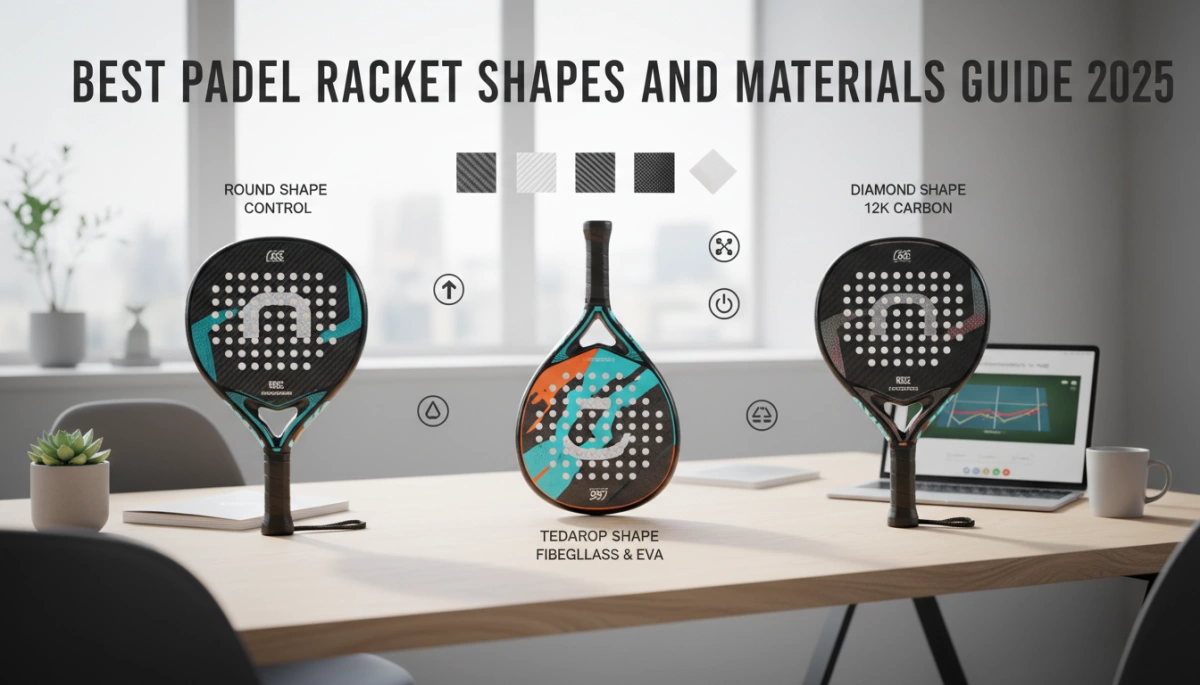
Si has estado navegando por tiendas online, probablemente habrás notado que las palas de pádel parecen haber sido diseñadas por tres personas diferentes que no pudieron ponerse de acuerdo en un plano. Comprender estas formas y materiales es la última pieza del rompecabezas antes de comprar.
Formas de pala explicadas: Redonda vs Lágrima vs Diamante
La forma de la pala dicta dónde se encuentra el "punto dulce" y cómo se distribuye el peso. Esto no es solo estética; cambia la física de tu golpe.
- Redonda: El punto dulce está justo en el centro de la cara. El peso suele estar equilibrado más cerca del mango (balance bajo). Esto hace que la pala sea fácil de maniobrar y muy permisiva si no golpeas la pelota perfectamente.
- Lágrima (Híbrida): Una mezcla entre redonda y diamante. El punto dulce se mueve ligeramente más arriba en la cara. Ofrece un equilibrio entre potencia y control, pero es ligeramente menos permisiva que una forma redonda.
- Diamante: El punto dulce está en la parte superior, cerca del borde superior. Son "pesadas de cabeza", lo que significa que generan una potencia masiva para los remates, pero son más difíciles de controlar y pueden forzar la muñeca si tu técnica no es sólida.
Qué formas se adaptan a qué perfiles de jugador
- El principiante (tú): Quédate con la Redonda. Punto. Necesitas un punto dulce grande para mantener los rallies. Las palas redondas te ayudan a aprender el control y la defensa sin castigar cada golpe descentrado.
- El intermedio/todoterreno: Puede experimentar con la Lágrima. Una vez que tu defensa sea sólida, una pala con forma de lágrima te da un poco más de potencia en tus golpes ofensivos.
- El atacante avanzado: Suele inclinarse por la Diamante. Estos jugadores tienen la técnica para manejar un punto dulce más pequeño y utilizan el equilibrio pesado en la cabeza para sacar la pelota de la cancha.
Fibra de vidrio vs. Fibra de carbono: Sensación, durabilidad y tolerancia
El material de la cara de la pala determina cómo reacciona la pelota al impactar con la superficie.
- Fibra de vidrio: Es suave y flexible. Cuando la pelota golpea la fibra de vidrio, el material se dobla ligeramente (el "efecto trampolín"), ayudando a impulsar la pelota desde la cara de la pala. Se siente cómoda y absorbe bien las vibraciones.
- Fibra de carbono: Es más rígida y dura. Proporciona precisión y potencia, pero requiere que tú aportes la fuerza. Si golpeas la pelota lentamente con una pala de carbono dura, la pelota muere.
Cómo los materiales afectan el control, la potencia y la vibración
Para un principiante en 2026, la elección del material a menudo se reduce a la comodidad versus la precisión.
- Indulgencia: La fibra de vidrio es la reina aquí. Te ayuda a pasar la pelota por encima de la red incluso con golpes lentos o bloqueos defensivos.
- Durabilidad: La fibra de carbono es generalmente más duradera y resistente a las grietas, pero a menudo es más cara.
- Vibración: Los materiales más blandos como la fibra de vidrio combinados con núcleos de espuma EVA suave absorben mejor los golpes. Si te preocupa el codo de tenista (o "codo de pádel"), evita las palas de carbono súper rígidas hasta que tus músculos se adapten al deporte.
Mi consejo: No lo compliques demasiado. Busca una forma redonda con una cara de fibra de vidrio (o una mezcla de carbono suave). Es la apuesta más segura para aprender el juego sin frustraciones.
Ofreciendo el mejor valor para principiantes de pádel
Hemos elaborado esta guía para eliminar el ruido y ofrecerte exactamente lo que necesitas para salir a la cancha con confianza. Así es como nos aseguramos de que obtengas las recomendaciones más fiables para tu juego.
Encontrar el equipo de pádel adecuado de forma natural
Al buscar las mejores palas de pádel para principiantes 2026, necesitas consejos claros y naturales, no una pared de especificaciones técnicas complicadas. Nos saltamos la jerga pesada e integramos sin problemas las características que realmente importan, centrándonos puramente en lo que mejora tu control y comodidad como nuevo jugador.
Basándose en citas reales de Reddit
Quieres consejos de gente que realmente juega. Nos apoyamos en gran medida en las citas de usuarios de Reddit para la autenticidad, agregando información cruda y sin filtrar de una enorme comunidad de más de 37.000 jugadores de pádel.
- Reseñas imparciales: Los jugadores reales no se andan con rodeos sobre los defectos de una pala.
- Experiencia real en la pista: Comentarios basados en el uso diario en canchas locales de EE. UU.
Destacando modelos de palas específicos
Los consejos generales solo llegan hasta cierto punto. Nos aseguramos de incluir recomendaciones de modelos prácticas y específicas para que sepas exactamente qué comprar antes de tu próximo partido.
- Precios claros: Desgloses honestos del valor dentro del rango de 100 a 200 $.
- Comparaciones directas: Mostrándote exactamente por qué una pala se adapta mejor a tu estilo de juego que otra.
Respondiendo a preguntas frecuentes de principiantes
Diseñamos este recurso para que sea tu ventanilla única. Al responder directamente a las preguntas de los principiantes, ofrecemos valor inmediato y soluciones rápidas a tus mayores obstáculos.
- Respuestas escaneables: Obtén los detalles exactos que necesitas en segundos.
- Consejos prácticos: Abordamos todo, desde elegir el tamaño de grip adecuado hasta encontrar el punto dulce definitivo.